Honour of Annaly - Feudal Principality & Seignory Est. 1172


|

The Continuity of Dignities, Names, and Intangible Rights under Irish Property Law:The Case of the Barons Delvin and Earls of WestmeathThe historical rights associated with the Nugent family, including the Barons Delvin and later the Earls of Westmeath, present a compelling example of how Irish property law intersects with intangible rights such as dignities, names, trade identity, and symbolic authority. While modern Irish law does not recognize feudal dignities as enforceable sovereign or jurisdictional rights, it does provide a framework through which the residual and derivative aspects of those dignities may persist as protectable intangible interests. I. Historical Foundation: Land, Honour, and AuthorityThe Nugent family emerged as feudal successors to earlier Gaelic rulers, including the O'Farrell dynasty, through the process of Crown consolidation and regrant during the Tudor period under Henry VIII. In this transformation, land was no longer held under Gaelic customary tenure but was reorganized into feudal estates and honours, often accompanied by a bundle of incorporeal hereditaments. These included:
Such rights were not merely symbolic; they were recognized forms of property, capable of conveyance, inheritance, and registration. The Honour of Annaly, like similar seignorial constructs, functioned as a territorial and juridical unit, binding land, authority, and identity into a single legal-historical framework. II. Property Law and the Transmission of Intangible RightsUnder traditional property doctrine, rights attached to land—whether corporeal or incorporeal—could pass through the chain of title as appurtenances or incidents. Irish conveyancing practice, particularly as evidenced through the Registry of Deeds, preserved not only the transfer of land but also references to associated rights and privileges. Crucially, some of these rights were capable of:
Thus, while the physical estate might be conveyed, elements of the historical dignity—especially those grounded in recognized property categories—could persist in modified form. III. The Evolution of Dignities in Modern Irish LawModern Irish law draws a distinction between:
The legal system no longer enforces:
However, it does recognize:
Under doctrines such as passing off, and statutes including the Trade Marks Act 1996, names and symbols associated with long-standing use may give rise to enforceable rights where they function as identifiers of origin, authority, or authenticity. IV. Names, Marks, and Symbols as Intangible PropertyThe enduring use of names such as “Delvin,” “Westmeath,” or territorial designations linked to the Honour of Annaly can generate accumulated goodwill over centuries. Where such names have been:
they may be treated as:
Similarly, heraldic symbols, insignia, and traditional marks—though not always protected as formal intellectual property—can function as distinctive identifiers, contributing to a broader protectable commercial identity. V. The Role of Historical Franchises in Supporting Modern ClaimsThe existence of historical franchises—such as market rights and patronage—plays a crucial evidentiary role. These rights demonstrate that the holder of the Honour:
Although these rights are no longer enforceable in their original form, they provide strong evidence of long-standing association between the name, the dignity, and the authority of the estate. This continuity strengthens modern claims to:
VI. A Modern Legal SynthesisThe rights of the Barons Delvin and Earls of Westmeath, when viewed through the lens of contemporary Irish law, are best understood not as surviving feudal powers, but as the foundation of a layered intangible asset. This asset includes:
Accordingly, the modern holder of an honour derived from these estates may assert:
ConclusionIrish property law does not preserve feudal dignities as enforceable sovereign rights. However, it does allow for the transformation of those dignities into modern intangible assets, particularly where they are supported by:
In this way, the legacy of the Nugent family—Barons Delvin and Earls of Westmeath—endures not as a relic of feudalism, but as a living framework of identity, reputation, and intangible property, rooted in centuries of legally recognized authority and preserved through the evolving mechanisms of Irish law.
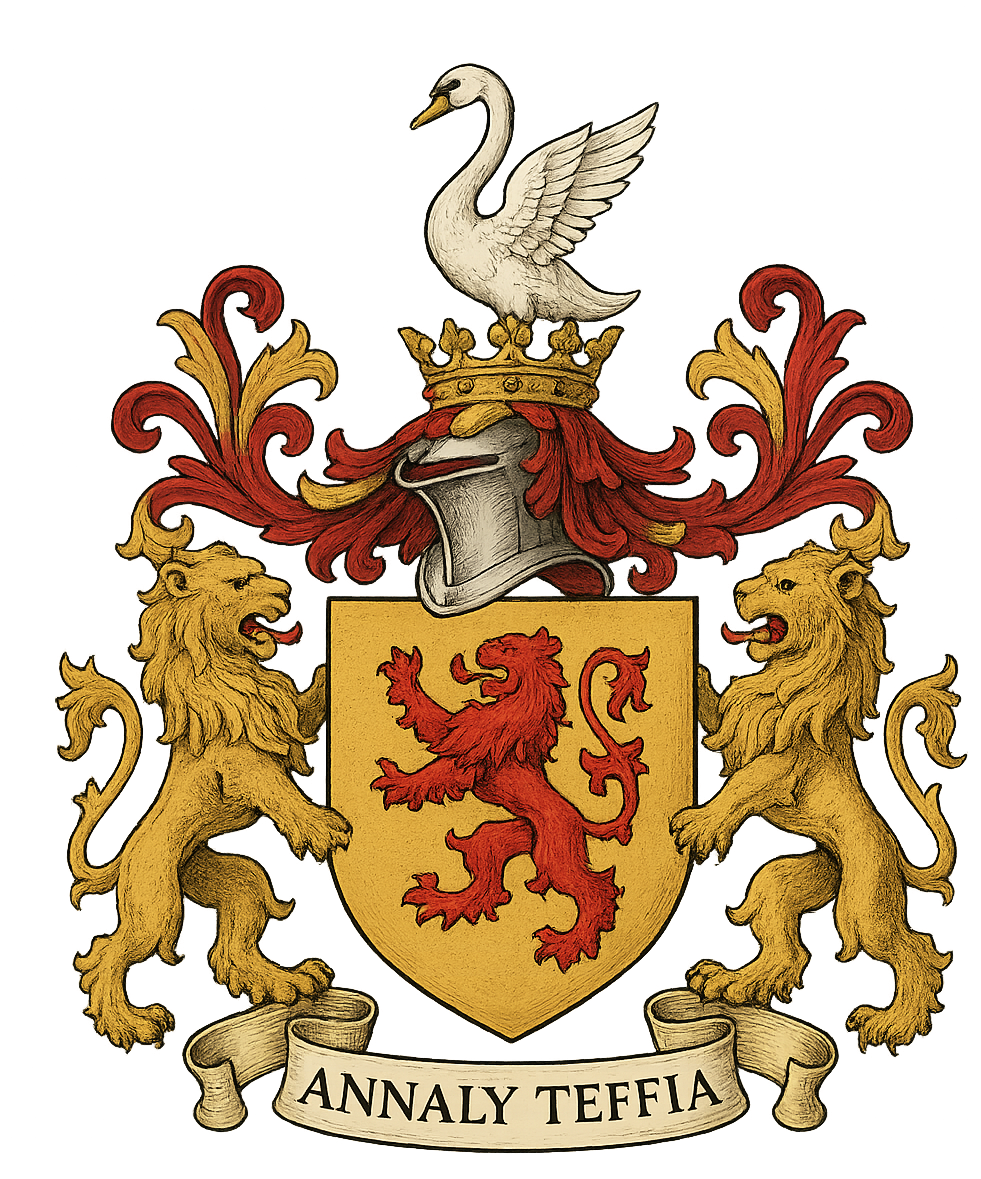
The Honour and Seignory of Annaly Longford Teffia The Feudal Succession to the Ancient Principality of AnnalyThe ancient Gaelic principality of Annaly (Anghaile / Muintir Anghaile), which evolved from the older indigenous territory of Teffia (Tethbae), was ruled for centuries by the Clan Princes by Election at the assembly/Parliament in Grenard or Longford. As hereditary chiefs of the Conmaicne clans in the midlands of Ireland, the O’Farrells exercised full native authority over the region that today comprises most of County Longford. Following the Tudor reconquest and the Crown’s policy of “surrender and regrant,” the English monarchy systematically transferred the substance of this indigenous lordship into the framework of English feudal law. Through a series of royal patents, the Nugent family — Barons of Delvin and later Earls of Westmeath — were formally invested with the rights, jurisdictions, and dignities previously held by the O’Farrell princes. This process made the Nugents the feudal successors to the O’Farrell principality in law and jurisdiction. The Pivotal 1565 Patent: Captainship and Custody of the Slewght WilliamThe cornerstone of this legal succession was the royal patent issued by Queen Elizabeth I on 22 November 1565 to Christopher Nugent, Baron Delvin. This grant explicitly conveyed:
Crucially, the 1565 patent — and its later expansions and confirmations (including under Elizabeth I c. 1583–1585 and James I) — established the Captainship and Custody of the Slewght William as hereditary forever, to be held by the Baron of Delvin and his heirs male in perpetuity. The grant was made in capite (directly from the Crown) and formed part of a broader bundle of rights that included monastic lands, manors, advowsons, market and fair privileges, courts baron, and other seignorial perquisites. Legal Effect of the SuccessionBy these royal patents, the Nugent lords were transformed from mere feudal barons into the paramount lords and captains of Annaly. In English common-law terms, they became the direct feudal successors to the O’Farrell principality:
Subsequent grants under Philip & Mary, Elizabeth I, and James I further expanded and confirmed these rights, solidifying the Nugent family’s position as the hereditary feudal overlords of the region for over 400 years. Modern Continuity of the HonourThe residual rights, privileges, and dignities of the Honour and Seignory of Annaly Longford Teffia — including the hereditary captainships and associated seignorial elements — were later conveyed by private deed from a successor in the Nugent/Westmeath line. These intangible property interests survive today under Irish property law as incorporeal hereditaments capable of being held, transferred, and protected in perpetuity. This layered history reflects the deep indigenous roots of the clans of Annaly and Teffia (spanning 1,500–2,000 years) blended with 800+ years of Nugent lordship through royal grant and dynastic intermarriage with Ireland’s ancient royal lines. |
About Longford Feudal Prince House of Annaly Teffia Rarest of All Noble Grants in European History Statutory Declaration by Earl Westmeath Kingdoms of County Longford Pedigree of Longford Annaly What is the Honor of Annaly The Seigneur Irish Roots of George Mentz Chronology of Teffia Annaly Lords Paramount Ireland Market & Fair Chief of The Annaly One of a Kind Title Lord Governor of Annaly Prince of Annaly Tuath Principality Feudal Kingdom Irish Princes before English Dukes & Barons Fons Honorum Seats of the Kingdoms Clans of Longford Region History Chronology of Annaly Longford Oldest Gaelic Kingdom Annaly Principality Nobility Law Normandy Hereditaments Captainship of Ireland Princes of Longford Holy Sites & Gods News Parliament 850 Years Grants in Six Baronies to Delvin Leadership Titles of Annaly Irish Free State 1172-1916 Feudal Princes 1556 Habsburg Grant and Princely Title Rathline and Cashel Kingdom The Last Irish Kingdom Landesherrschaft King Edward VI - Grant of Annaly Granard Spritual Rights of Honour of Annaly Principality of Cairbre-Gabhra House of Annaly Teffia 1400 Years Old Count of the Palatine of Meath Irish Property Law Manors Castles and Church Lands A Barony Explained Moiety of Barony of Delvin Nugents of Annaly Ireland Spiritual & Temporal Islands of The Honour of Annaly Longford Blood Dynastic Burke's Debrett's Peerage Recognitions Water Rights Annaly Property Law Writs to Parliament Irish Nobility Law Moiety of Ardagh Dual Grant from King Philip of Spain Rights of Lords & Barons Princes of Annaly Pedigree Abbeys of Longford Styles and Dignities Ireland Feudal Titles Versus France & Germany Austria Sovereign Title Succession Mediatized Prince of Ireland Grants to Delvin Lord of St. Brigit's Longford Abbey Est. 1578 Feudal Barons Water & Fishing Rights Clan Brehon Tribal Law Comparison Ancient Castles and Ruins Abbey Lara Honorifics and Designations Kingdom of Meath Feudal Westmeath Seneschal of Meath Lord of the Pale Irish Gods The Feudal System Baron Delvin Kings of Hy Niall Colmanians Irish Kingdoms Order of St. Columba Chief Captain Kings Forces Commissioners of the Peace Tenures Abolition Act 1662 - Rights to Sit in Parliament Contact Law of Ireland List of Townlands of Longford Annaly English Pale Court Barons Lordships of Granard Irish Feudal Law Datuk Seri Baliwick of Ennerdale Moneylagen Lord Baron Longford Baron de Delvyn Longford Map Lord Baron of Delvin Baron of Temple-Michael Baron of Annaly Kingdom Annaly Lord Conmaicne Baron Annaly Burke's and Debrett's Peerage Citations Order of Saint Patrick Baron Lerha Granard Baron AbbeyLara Baronies of Longford Princes of Conmhaícne Angaile or Muintir Angaile Baron Lisnanagh or Lissaghanedan Baron Moyashel Baron Rathline Baron Inchcleraun HOLY ISLAND Quaker Island Longoford CO Abbey of All Saints Kingdom of Uí Maine Baron Dungannon Baron Monilagan - Babington Lord Liserdawle Castle Baron Columbkille Kingdom of Breifne or Breny Baron Kilthorne Baron Granarde Count of Killasonna Baron Skryne Baron Cairbre-Gabhra AbbeyShrule Events Castle Site Map Disclaimer Irish Property Rights Indigeneous Clans Dictionary Maps Honorable Colonel Mentz Valuation of Principality & Barony of Annaly Longford Irish Noble Titles of Annaly Longford“The Princely House of Annaly–Teffia is a territorial and dynastic house of approximately 1,500 years’ antiquity, originating in the Gaelic kingship of Teffia and preserved through the continuous identity, property law, international law, and inheritance of its lands, irrespective of changes in political sovereignty.”
Feudal Baron of Longford Annaly - Baron Longford Delvin Lord Baron &
Freiherr of Longford Annaly Feudal Barony Principality Count Kingdom of Meath - Feudal Lord of the Fief
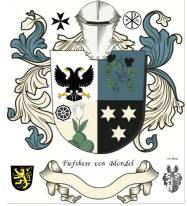
Blondel of the Nordic Channel Islands Guernsey Est. 1179 George Mentz
Bio -
George Mentz Noble Title -
George Mentz Ambassador - Order of the Genet
Knighthood Feudalherr - Fief Blondel von der Nordischen
Insel Guernsey Est. 1179 * New York Gazette ®
- Magazine of Wall Street - George
Mentz - George
Mentz - Aspen Commission - Ennerdale - Stoborough - ESG
Commission - Ethnic Lives Matter
- Chartered Financial Manager -
George Mentz
Economist -
George Mentz Ambassador -
George Mentz - George Mentz Celebrity -
George Mentz Speaker - George Mentz Audio Books - George Mentz Courses - George Mentz Celebrity Speaker Wealth
Management -
Counselor George Mentz Esq. - Seigneur Feif Blondel - Lord Baron
Longford Annaly Westmeath
www.BaronLongford.com * www.FiefBlondel.com |

Commissioner George Mentz - George
Mentz Law Professor - George
Mentz Economist
George Mentz News -
George Mentz Illuminati Historian -
George Mentz Net Worth
The Globe and Mail George Mentz
Get Certifications in Finance and Banking to Have Career Growth | AP News