Honour of Annaly - Feudal Principality & Seignory Est. 1172


|

The Nugents History of Barons of DelvinEight and a Half Centuries of Irish Nobility, Integration, and Governance Historical OverviewThe Nugents, Barons of Delvin, represent one of the most enduring noble houses in Irish history, with an unbroken presence in Ireland spanning more than 850 years. Originating in the late twelfth century as holders of the Barony of Delvin under the Lordship of Meath, the family rapidly became fully integrated into the Irish nobility, functioning not as an external colonial house but as a permanent and deeply rooted element of Ireland’s aristocratic order. By the fourteenth century, Delvin was recognized as a parliamentary peerage and consistently ranked among the senior Irish baronies. From an early date, the Nugents intermarried extensively with the ancient Gaelic and Hiberno-Norman nobility, blending Norman feudal structures with Irish dynastic traditions. Through marriages with families such as the O’Farrell princes of Annaly, the FitzGeralds of Kildare, the Plunkets of Dunsany, the Darcys, the Drakes, and other established Irish houses, the Nugents became inseparable from the fabric of Irish aristocratic society. Over generations, the family adopted Irish political customs, military alliances, and territorial responsibilities, reflecting a process of full Gaelic and Old English integration. Lands, Lordship, and Territorial AuthorityFor more than seven centuries, the Nugents held extensive lands in Meath and Westmeath, later expanding into Annaly (modern County Longford) through major Crown grants during the Tudor period. In 1597, a substantial grant was made to the Baron of Delvin comprising approximately one-half of the Annaly–Longford region, representing one of the most significant redistributions of former Gaelic princely territory in the Irish midlands. This grant was formally confirmed on 10 August 1603 to the Baron of Delvin and his mother, with an assessed annual value of £100, cementing the Nugents’ position as principal territorial magnates in the region. These lands included former Gaelic lordships, ecclesiastical properties, and strategic manorial holdings, further reinforcing Delvin’s authority within the historic Kingdom and Honour of Annaly. High Offices and AppointmentsMembers of the Nugent family held many of the highest civil, judicial, and military offices in Ireland, reflecting both Crown trust and local legitimacy. Among the offices held were:
Richard Nugent, Baron of Delvin, served as Seneschal of the Liberty of Meath, exercising wide judicial and administrative authority. The Baron of Delvin also served as Lord Justice of Ireland in 1526, and members of the family frequently appeared as Justices of the Peace for County Meath, alongside leading Irish gentry and nobles. Military and Political Role in Ireland and AbroadThe Nugents were central figures in the defense of the Pale, the Tudor consolidation of Ireland, and the administration of the realm under the Stuarts. During periods of unrest, they operated as mediators between the Crown and Gaelic Ireland, a role made possible by their familial ties to both traditions. In the seventeenth century, members of the family held senior commands in the Irish Confederate forces and later served with distinction in the Spanish, French, and other Continental armies, continuing Ireland’s long tradition of military service abroad. Despite Cromwellian confiscations, the Nugents recovered their estates at the Restoration of 1660, reaffirming their standing among Ireland’s ancient nobility. Legacy and Noble StandingAlthough the male line of the original Barony of Delvin eventually failed and the barony entered abeyance, the Nugents retained the Earldom of Westmeath, their estates, and their historic dignity. Their lineage exemplifies the fusion of Norman, Old English, and Gaelic aristocratic traditions, making the Nugents not merely settlers, but an integral Irish noble dynasty whose authority rested on land, law, marriage, and service to Ireland itself.
The foundational and earliest grant to the Nugent (de Nugent) family, establishing the Barony/Lordship of Delvin, was the late 12th-century conveyance (c. 1172–early 13th century; formal barony by ~1202 in some accounts) by Hugh de Lacy, Lord of Meath (granted the vast Liberty/Palatinate of Meath by Henry II post-1171 Norman invasion). This specifically comprised the territory of Delbhna/Dealbha/Delvin (western marches of Meath, modern Barony of Delvin in County Westmeath), including the clan lands formerly held in Irish times by the O'Finolin (Ó Fionnalláin / O'Fenelon / O'Finallans / O'Finnallan) chiefs ("Delvin totam quam in tempore Hibernicorum tenuerunt O Finclani cum omnibus" — the whole Delvin which in the time of the Irish was held by the O'Finolans, per ancient grant descriptions). These O'Finolin/Delbhna lands and associated tribes extended into or directly bordered the ancient territories of Teffia (Tethbae/Tethba, precursor areas of modern Longford and parts of Westmeath) and Annaly (Anghaile, the O'Farrell/Ó Fearghail principality), positioning the Nugents as frontier lords controlling western Meath marches adjoining these Gaelic kingdoms. This created the hereditary Barony of Delvin with manors, Delvin Castle, feudal rights (knight's fee, court baron, etc.), and overlordship elements over local septs. It displaced/subjugated the Gaelic O'Finolin chiefs while absorbing border elements toward Teffia/Annaly. Subsequent grants, especially into core Annaly (roughly modern County Longford and adjacent old Westmeath/Longford border areas), occurred mainly in the 16th–early 17th centuries during Tudor plantations, monastic dissolutions, and regrants of forfeited Gaelic lands. These built on the Delvin base, often involving dissolved monasteries (e.g., Inchmore/Inismore on Lough Ree), priories, islands, rectories/tithes, castles (Lissardowlan/Liserdawle), markets/fairs, captaincies over septs (e.g., Sleught-William/Clann Liam), and "in capite" knight-service tenures. Numbering of Barons Delvin varies (Richard as ~13th/4th in different counts; Christopher as 14th/5th–6th); mid-16th-century grants typically to Richard Nugent (d. 1559), later to Christopher (b. ~1544, succ. 1559, d. 1602). Chronological list of major grants (focusing on land, lordships, manors, and rights in Delvin/Westmeath and Annaly/old Westmeath/Longford border areas; many details from Fiants, Patent Rolls, and dissolution records):
Later grants (post-Restoration, etc.) are outside the primary Baron Delvin focus. The original Delvin grant (stressing Delbhna/O'Finolin borderlands with Teffia/Annaly) remained the hereditary core, with Tudor/Jacobean additions layering monastic, forfeited, and plantation elements into a composite "Honour" of manors and liberties. Exact acreages/parcels vary; cross-reference primary sources (Fiants Elizabeth, Patent Rolls) for precision.
Below is a careful, historically defensible chronology of the earliest known grants of land, lordships, and manors to the Barons of Delvin (Nugent), including Meath, Westmeath, and later Annaly (Longford). I’ve separated what is firmly established, what is very strongly inferred, and what is later formally documented, so this can stand up to academic or legal-historical scrutiny. Chronological List of the Earliest Grants to the Barons of Delvinc. 1171–1172 — Original Feudal CreationGrantor: Hugh de Lacy, Lord of Meath (under Henry II) Grant:
Location:
Significance:
Late 12th–13th centuries — Consolidation GrantsGrantor: Crown and De Lacy successors Grants (incremental, manorial):
Nature:
c. 1371–1380 — Parliamentary Recognition & Lordship ConfirmationGrantor: English Crown (Edward III / Richard II era) Grant / Recognition:
Significance:
15th Century (c. 1400–1475) — Office-Tied Territorial ControlGrantor: Crown Associated Land Authority:
Significance:
1530s–1541 — Dissolution of the Monasteries (First Phase Control)Grantor: Henry VIII Lands Affected (Annaly & Westmeath):
Legal Status:
Significance:
1541 — First Known Formal Patent (Fore & Belgard)Grantor: Henry VIII Grant:
Tenure:
Significance:
1552 — Edward VI Grants (Annaly Expansion)Grantor: Edward VI Grant:
Significance:
1556–1557 — Philip & Mary ConfirmationsGrantor: Philip & Mary Grant / Confirmation:
Significance:
1597 — The Great Annaly GrantGrantor: Elizabeth I Grant:
Significance:
10 August 1603 — Stuart ConfirmationGrantor: James I Grant:
Significance:
1621 — Elevation to Earl of WestmeathGrantor: James I Effect on Landholding:
Summary Table (Condensed)
Key Takeaway (Important)The Barons of Delvin were not late arrivals in Annaly. Their authority there arose through:
This makes Delvin one of the principal successor lordships to the ancient Kingdom and Honour of Annaly, alongside — and in some respects replacing — the O’Farrell princes.
|
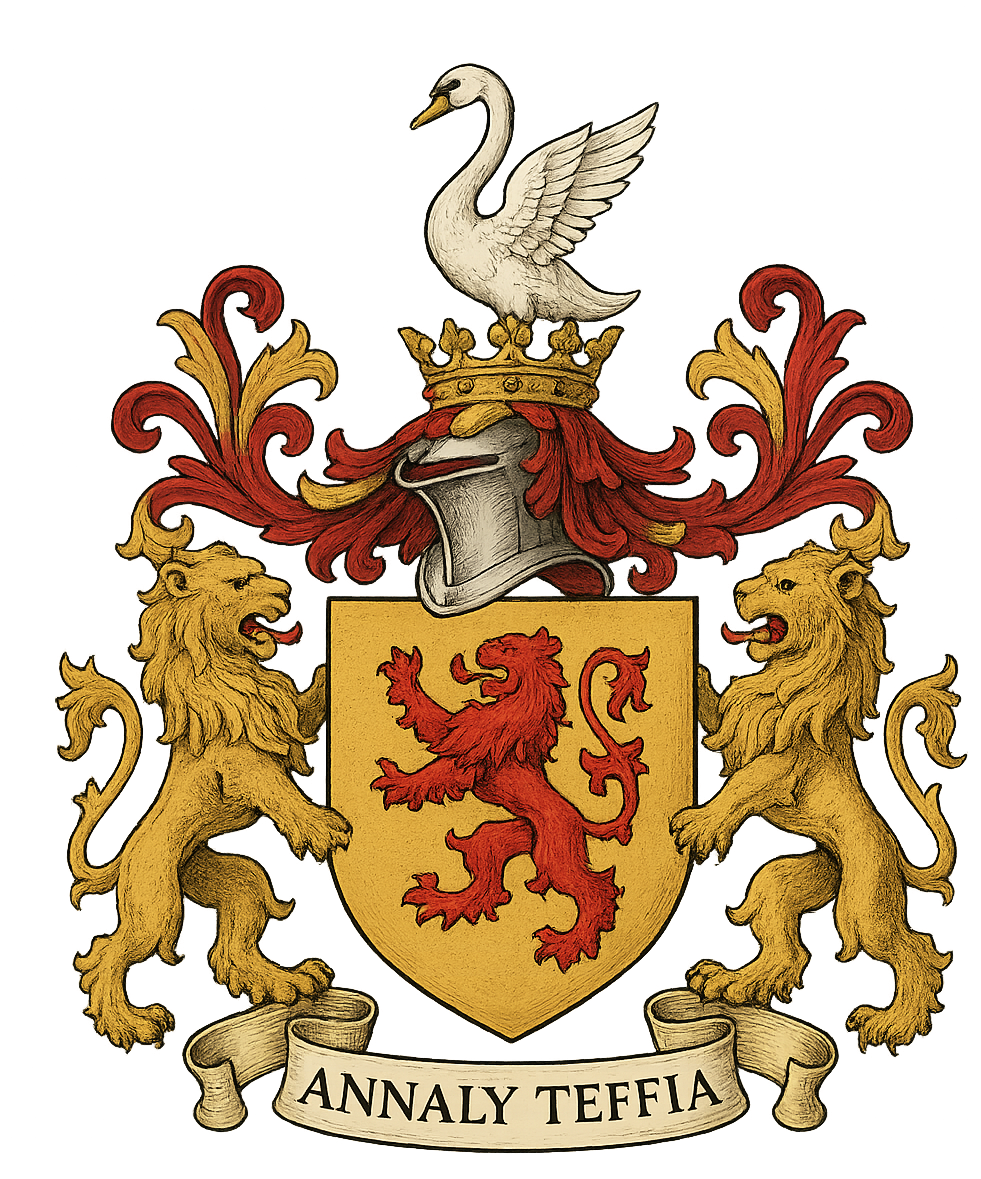
About Longford Feudal Prince House of Annaly Teffia Rarest of All Noble Grants in European History Statutory Declaration by Earl Westmeath Kingdoms of County Longford Pedigree of Longford Annaly What is the Honor of Annaly The Seigneur Irish Roots of George Mentz Chronology of Teffia Annaly Lords Paramount Ireland Market & Fair Chief of The Annaly One of a Kind Title Lord Governor of Annaly Prince of Annaly Tuath Principality Feudal Kingdom Irish Princes before English Dukes & Barons Fons Honorum Seats of the Kingdoms Clans of Longford Region History Chronology of Annaly Longford Oldest Gaelic Kingdom Annaly Principality Nobility Law Normandy Hereditaments Captainship of Ireland Princes of Longford Holy Sites & Gods News Parliament 850 Years Grants in Six Baronies to Delvin Leadership Titles of Annaly Irish Free State 1172-1916 Feudal Princes 1556 Habsburg Grant and Princely Title Rathline and Cashel Kingdom The Last Irish Kingdom Landesherrschaft King Edward VI - Grant of Annaly Granard Spritual Rights of Honour of Annaly Principality of Cairbre-Gabhra House of Annaly Teffia 1400 Years Old Count of the Palatine of Meath Irish Property Law Manors Castles and Church Lands A Barony Explained Moiety of Barony of Delvin Nugents of Annaly Ireland Spiritual & Temporal Islands of The Honour of Annaly Longford Blood Dynastic Burke's Debrett's Peerage Recognitions Water Rights Annaly Property Law Writs to Parliament Irish Nobility Law Moiety of Ardagh Dual Grant from King Philip of Spain Rights of Lords & Barons Princes of Annaly Pedigree Abbeys of Longford Styles and Dignities Ireland Feudal Titles Versus France & Germany Austria Sovereign Title Succession Mediatized Prince of Ireland Grants to Delvin Lord of St. Brigit's Longford Abbey Est. 1578 Feudal Barons Water & Fishing Rights Clan Brehon Tribal Law Comparison Ancient Castles and Ruins Abbey Lara Honorifics and Designations Kingdom of Meath Feudal Westmeath Seneschal of Meath Lord of the Pale Irish Gods The Feudal System Baron Delvin Kings of Hy Niall Colmanians Irish Kingdoms Order of St. Columba Chief Captain Kings Forces Commissioners of the Peace Tenures Abolition Act 1662 - Rights to Sit in Parliament Contact Law of Ireland List of Townlands of Longford Annaly English Pale Court Barons Lordships of Granard Irish Feudal Law Datuk Seri Baliwick of Ennerdale Moneylagen Lord Baron Longford Baron de Delvyn Longford Map Lord Baron of Delvin Baron of Temple-Michael Baron of Annaly Kingdom Annaly Lord Conmaicne Baron Annaly Burke's and Debrett's Peerage Citations Order of Saint Patrick Baron Lerha Granard Baron AbbeyLara Baronies of Longford Princes of Conmhaícne Angaile or Muintir Angaile Baron Lisnanagh or Lissaghanedan Baron Moyashel Baron Rathline Baron Inchcleraun HOLY ISLAND Quaker Island Longoford CO Abbey of All Saints Kingdom of Uí Maine Baron Dungannon Baron Monilagan - Babington Lord Liserdawle Castle Baron Columbkille Kingdom of Breifne or Breny Baron Kilthorne Baron Granarde Count of Killasonna Baron Skryne Baron Cairbre-Gabhra AbbeyShrule Events Castle Site Map Disclaimer Irish Property Rights Indigeneous Clans Dictionary Maps Honorable Colonel Mentz Valuation of Principality & Barony of Annaly Longford Irish Noble Titles of Annaly Longford“The Princely House of Annaly–Teffia is a territorial and dynastic house of approximately 1,500 years’ antiquity, originating in the Gaelic kingship of Teffia and preserved through the continuous identity, property law, international law, and inheritance of its lands, irrespective of changes in political sovereignty.”
Feudal Baron of Longford Annaly - Baron Longford Delvin Lord Baron &
Freiherr of Longford Annaly Feudal Barony Principality Count Kingdom of Meath - Feudal Lord of the Fief
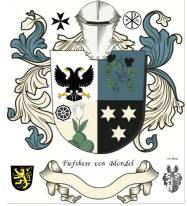
Blondel of the Nordic Channel Islands Guernsey Est. 1179 George Mentz
Bio -
George Mentz Noble Title -
George Mentz Ambassador - Order of the Genet
Knighthood Feudalherr - Fief Blondel von der Nordischen
Insel Guernsey Est. 1179 * New York Gazette ®
- Magazine of Wall Street - George
Mentz - George
Mentz - Aspen Commission - Ennerdale - Stoborough - ESG
Commission - Ethnic Lives Matter
- Chartered Financial Manager -
George Mentz
Economist -
George Mentz Ambassador -
George Mentz - George Mentz Celebrity -
George Mentz Speaker - George Mentz Audio Books - George Mentz Courses - George Mentz Celebrity Speaker Wealth
Management -
Counselor George Mentz Esq. - Seigneur Feif Blondel - Lord Baron
Longford Annaly Westmeath
www.BaronLongford.com * www.FiefBlondel.com |
Commissioner George Mentz - George
Mentz Law Professor - George
Mentz Economist
George Mentz News -
George Mentz Illuminati Historian -
George Mentz Net Worth
The Globe and Mail George Mentz
Get Certifications in Finance and Banking to Have Career Growth | AP News