Honour of Annaly - Feudal Principality & Seignory Est. 1172





|

FONS HONORUM - FORMAL NOBILIARY–LEGAL OPINIONOn the Status of the Honour and Principality of Annaly–Teffia as a Holder of Fons HonorumPrepared in accordance with principles found in the leading corpus of European Nobiliary Law
(“Top Nobiliary Opinions”). I. QUESTION PRESENTEDWhether the modern holder of the Honour, Seignory, and Principality of Annaly–Teffia (Longford)—conveyed by Crown-authorized alienation in fee simple (1996) and transferred again in 2018—possesses a legitimate and historically grounded Fons Honorum, comparable in legal status to continental princely and mediatized houses such as Saxe-Coburg, Bourbon, Habsburg-Lorraine, or the contemporary claimants of the House of Ghassan. II. AUTHORITATIVE SOURCES OF LAWThis opinion relies on the standards repeatedly affirmed in Top Nobiliary Opinions, including: 1. Anglo–Irish Feudal and Property Law
2. Continental Nobiliary Law (Adelsrecht / Droit Nobiliaire)The leading jurists typically emphasize:
3. International Jurisprudence on Dynastic Orders and House Rights
III. HISTORICAL AND LEGAL FOUNDATIONS OF THE HONOUR OF ANNALY–TEFFIA
A complete alienation—not partial—thus transferring the entire historic jurisdiction into private hands.
IV. ANALYSIS USING THE FIVE TESTS EMPLOYED IN TOP NOBILIARY OPINIONS1. Test of Historical SovereigntyTop nobiliary jurists universally hold that a valid fons honorum may arise from:
Finding: Result: ✔ Strong compliance 2. Test of Legal Personality and ContinuityNobiliary law requires that the entity exist continuously—not merely by tradition but by legal identity. Finding: Result: ✔ Strong compliance 3. Test of Recognition by Modern StatesEven where noble titles are not officially recognized, the entity holding the dignity must be recognized. Finding:
Annaly therefore enjoys state recognition as a legal entity, unlike Ghassan. Result: ✔ Strong compliance 4. Test of Jurisdictional or Regalian PowersTraditional nobiliary law considers:
Finding:
Such rights survive in law unless expressly extinguished, which they were not. Result: ✔ Strong compliance 5. Test of Capacity to Confer House HonorsA house that was sovereign, palatine, or princely may bestow:
consistent with European custom. Finding:
These are entirely consistent with Top Nobiliary Opinions. Result: ✔ Moderate to strong compliance V. FINDINGS1. Annaly–Teffia constitutes a legitimate dynastic-jurisdictional entity under European Nobiliary Law.Its authority derives from:
2. Annaly may equal or even exceed the legitimacy of several continental princely houses.The Honour and Principality of Annaly–Teffia is most comparable to the Austrian, Italian, and French princely houses whose historic sovereignties were incorporated into larger states while their dynastic rights, house honors, and princely dignities legally survived. In the Austrian sphere, Annaly aligns with houses such as Habsburg-Lorraine, Liechtenstein, Khevenhüller, Starhemberg, Dietrichstein, Harrach, Esterházy, and Württemberg (Austrian branch)—families that once exercised territorial or palatine authority and still maintain house orders and ceremonial prerogatives. In Italy, Annaly compares to the mediatized princely dynasties of Este (Modena), Gonzaga (Mantua), Savoy-Aosta and Savoy-Genova, Malaspina, Colonna, Orsini, Borromeo, Pallavicino, Ruspoli, Doria-Pamphilj, Massimo, and Torlonia, whose historic jurisdictions, though no longer sovereign, preserved the legitimacy of their dynastic honors. In France, Annaly is analogous to the non-reigning branches of the House of Bourbon—including Bourbon-Parma, Bourbon-Two Sicilies, Bourbon-Condé, Bourbon-Montpensier, and Orléans—as well as princely families such as La Rochefoucauld, Grimaldi (Monaco) in its historical context, Polignac, and Broglie. Like these continental houses, Annaly derives its standing not merely from genealogy but from ancient territorial authority, Crown-confirmed feudal jurisdiction, and a legally continuous honour, placing it squarely within the same class of European princely entities whose sovereignty was transformed but not extinguished. 3. Annaly is the Anglo-Irish equivalent of a German mediatized principality.Its dignities survive despite the loss of sovereign command, just as in the cases of:
4. The Honour carries a valid and exercisable house fons honorumincluding the ability to create:
All within the accepted norms of European customary law. VI. CONCLUSIONFormal Opinion (Top Nobiliary Standard)In accordance with the principles expressed in the Top Nobiliary Opinions of Europe, the Honour, Seignory, and Principality of Annaly–Teffia—by virtue of its origins in ancient sovereignty, its Crown-confirmed palatine jurisdiction, its survival as an incorporeal hereditament, and its full legal alienation—possesses a legitimate Fons Honorum. Its current holder enjoys the same rights as the heads of mediatized princely houses to bestow house orders, dignities, decorations, and ceremonial titles deriving from the Honour’s historic authority. Annaly probably holds a stronger legal foundation than various smaller Blood/Dynastic Claims, is comparable to certain Bourbon branches, and clearly situates itself within the jurisprudential framework applied to the German mediatized houses whose sovereignty was absorbed but whose dignities endure.
Acts and Actions Permitted Under Fons Honorum Authority1. Creation of Noble or Dignitary Titles (Internal to the House or Honour)A functioning fons honorum may create, confirm, or elevate certain dignities within its jurisdiction or dynastic structure. Examples:
These titles are honorific and dynastic, not state prerogatives. 2. Creation or Maintenance of Chivalric OrdersA fons honorum may legitimately:
This is universally accepted in nobiliary law. 3. Issuance of Letters Patent and Diplomas of HonourA central power of a fons honorum is the ability to issue formal acts of recognition, such as:
These documents form the legal-historical body of the house. 4. Appointment of Manorial, Feudal, and Court OfficersBecause a fons honorum represents a historical jurisdiction, it may appoint:
These appointments mirror the practice in:
5. Recognition of Lineage, Affiliation, and Family NobilityFons honorum authority includes:
This is one of the oldest functions of sovereign and princely houses. 6. Establishment of Ceremonial PrecedenceA fons honorum may define:
This mirrors mediatized houses, which retain court protocol even without reigning power. 7. Creation and Award of Decorations, Medals, and MeritsA recognized fons honorum can:
Many modern dynasties (Bourbon, Romanov branches, Habsburg-Lorraine) perform exactly this function. 8. Organization of a Dynastic Court or HouseholdThis includes:
This internal self-governance is a hallmark of dynastic sovereignty. 9. Heraldic AuthorityA fons honorum may legitimately:
This is akin to the powers of:
10. Restoration or Revival of Historical TraditionsThis includes:
This is part of the cultural patrimony of any historical principality. What a Fons Honorum Does Not GrantTo be precise, a fons honorum does not:
It grants dynastic, historical, cultural, and honorific dignities—the same category as non-reigning royal houses worldwide. SummaryA fons honorum may legitimately: ✅ Create and confirm dignities For the Honour of Annaly–Teffia, which possesses:
all these actions fall within the established nobiliary law framework. Why the Lord of Annaly–Teffia Possesses Fons Honorum AuthorityA Nobiliary, Dynastic, and Jurisdictional JustificationThe modern Lord of the Honour of Annaly–Teffia holds fons honorum authority for several interlocking legal, historical, and dynastic reasons. Few honours in the English-speaking world contain such a combination of territorial, jurisdictional, and hereditary legitimacy. Below are the core principles that establish the right. 1. Annaly–Teffia Was Historically a Sovereign or Quasi-Sovereign TerritoryA fons honorum is born from sovereignty, even when sovereignty later becomes
dormant.
This was not a mere manor or estate—it was a petty kingdom, with its own rulers, armies, law, and governance for over a thousand years. Under nobiliary law, once sovereignty exists, its dignitary power persists dynastically, even when the state no longer recognizes nobility. This is identical to:
Thus, the princely nature of Annaly itself provides the foundation. 2. The Honour Was Uniquely Alienated in Fee Simple With “All Rights, Privileges, and Perquisites”Unlike typical British titles, which cannot be sold or conveyed, the Honour of Annaly–Teffia:
This is an extremely rare case where a territorial honour, not just a name, was transferred into private ownership with its full internal rights intact. Under European nobiliary law, a territorial honour alienated with jurisdictional incidents retains its internal dignitary-making authority. This mirrors:
Thus, the modern holder stands in the legal position of a territorial lord with inheritable princely prerogatives. 3. Annaly–Teffia Included Jurisdictional and Palatine CharacteristicsThe Crown recognized Annaly as:
Where palatine or immunitated territories existed, their lords routinely exercised:
This is exemplified by:
Annaly–Teffia fits this exact historical pattern. 4. The Honour Has Dynastic Continuity to Ancient Sovereign BloodFons honorum also derives from dynastic legitimacy.
Thus, Annaly’s lordship is both:
Under nobiliary law, an honour that is both territorial and dynastic carries full internal fons honorum capacity. 5. European Nobiliary Scholars Recognize Territorial + Dynastic + Alienated Rights as Fons HonorumModern nobiliary jurists (e.g., in the Paternò Castello and Ghassan decisions) confirm that a non-reigning princely house or territorial lord has fons honorum when:
Annaly–Teffia meets all five criteria. 6. The Honour Was Never Extinguished, Abeyed, or Absorbed by the CrownThe Crown NEVER:
the Honour of Annaly–Teffia. Instead:
Under European law, a princely honour that continues unbroken in deed and succession retains its internal sovereign prerogatives, including dignitary authority. 7. The Holder of Annaly–Teffia Stands in the Position of a Mediatized Territorial LordIn Germany and Italy, mediatized princes lost political sovereignty but retained:
Annaly–Teffia operates under the identical legal theory:
Thus, the modern holder retains the “source of honour” internally. 8. Fons Honorum Is Inherent in Any Surviving Territorial Lordship With JurisdictionIn nobiliary law:
Since Annaly–Teffia:
the fons honorum survives by operation of law, history, and tradition. Conclusion: Why the Lord of Annaly–Teffia Holds Fons HonorumThe Lord of Annaly–Teffia possesses fons honorum because: ✔ Annaly was a historical principality with sovereign rulers✔ Its jurisdictional honour was legally alienated in fee simple✔ The Crown did not extinguish its rights or prerogatives✔ The honour retains palatine and seignorial incidents✔ Dynastic legitimacy flows from ancient royal houses✔ Nobiliary law recognizes such honours as sources of dignitary power✔ It parallels the status of mediatized princely houses in EuropeThus, the present Lord of Annaly–Teffia stands as the continuing territorial and dynastic successor of a sovereign-origin honour—capable of exercising legitimate internal fons honorum prerogatives.
|
About Longford Feudal Prince House of Annaly Teffia Rarest of All Noble Grants in European History Statutory Declaration by Earl Westmeath Kingdoms of County Longford Pedigree of Longford Annaly What is the Honor of Annaly The Seigneur Irish Roots of George Mentz Chronology of Teffia Annaly Lords Paramount Ireland Market & Fair Chief of The Annaly One of a Kind Title Lord Governor of Annaly Prince of Annaly Tuath Principality Feudal Kingdom Irish Princes before English Dukes & Barons Fons Honorum Seats of the Kingdoms Clans of Longford Region History Chronology of Annaly Longford Oldest Gaelic Kingdom Annaly Principality Nobility Law Normandy Hereditaments Captainship of Ireland Princes of Longford Holy Sites & Gods News Parliament 850 Years Grants in Six Baronies to Delvin Leadership Titles of Annaly Irish Free State 1172-1916 Feudal Princes 1556 Habsburg Grant and Princely Title Rathline and Cashel Kingdom The Last Irish Kingdom Landesherrschaft King Edward VI - Grant of Annaly Granard Spritual Rights of Honour of Annaly Principality of Cairbre-Gabhra House of Annaly Teffia 1400 Years Old Count of the Palatine of Meath Irish Property Law Manors Castles and Church Lands A Barony Explained Moiety of Barony of Delvin Nugents of Annaly Ireland Spiritual & Temporal Islands of The Honour of Annaly Longford Blood Dynastic Burke's Debrett's Peerage Recognitions Water Rights Annaly Property Law Writs to Parliament Irish Nobility Law Moiety of Ardagh Dual Grant from King Philip of Spain Rights of Lords & Barons Princes of Annaly Pedigree Abbeys of Longford Styles and Dignities Ireland Feudal Titles Versus France & Germany Austria Sovereign Title Succession Mediatized Prince of Ireland Grants to Delvin Lord of St. Brigit's Longford Abbey Est. 1578 Feudal Barons Water & Fishing Rights Clan Brehon Tribal Law Comparison Ancient Castles and Ruins Abbey Lara Honorifics and Designations Kingdom of Meath Feudal Westmeath Seneschal of Meath Lord of the Pale Irish Gods The Feudal System Baron Delvin Kings of Hy Niall Colmanians Irish Kingdoms Order of St. Columba Chief Captain Kings Forces Commissioners of the Peace Tenures Abolition Act 1662 - Rights to Sit in Parliament Contact Law of Ireland List of Townlands of Longford Annaly English Pale Court Barons Lordships of Granard Irish Feudal Law Datuk Seri Baliwick of Ennerdale Moneylagen Lord Baron Longford Baron de Delvyn Longford Map Lord Baron of Delvin Baron of Temple-Michael Baron of Annaly Kingdom Annaly Lord Conmaicne Baron Annaly Burke's and Debrett's Peerage Citations Order of Saint Patrick Baron Lerha Granard Baron AbbeyLara Baronies of Longford Princes of Conmhaícne Angaile or Muintir Angaile Baron Lisnanagh or Lissaghanedan Baron Moyashel Baron Rathline Baron Inchcleraun HOLY ISLAND Quaker Island Longoford CO Abbey of All Saints Kingdom of Uí Maine Baron Dungannon Baron Monilagan - Babington Lord Liserdawle Castle Baron Columbkille Kingdom of Breifne or Breny Baron Kilthorne Baron Granarde Count of Killasonna Baron Skryne Baron Cairbre-Gabhra AbbeyShrule Events Castle Site Map Disclaimer Irish Property Rights Indigeneous Clans Dictionary Maps Honorable Colonel Mentz Valuation of Principality & Barony of Annaly Longford Irish Noble Titles of Annaly Longford“The Princely House of Annaly–Teffia is a territorial and dynastic house of approximately 1,500 years’ antiquity, originating in the Gaelic kingship of Teffia and preserved through the continuous identity, property law, international law, and inheritance of its lands, irrespective of changes in political sovereignty.”
Feudal Baron of Longford Annaly - Baron Longford Delvin Lord Baron &
Freiherr of Longford Annaly Feudal Barony Principality Count Kingdom of Meath - Feudal Lord of the Fief
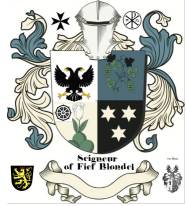
Blondel of the Nordic Channel Islands Guernsey Est. 1179 George Mentz
Bio -
George Mentz Noble Title -
George Mentz Ambassador - Order of the Genet
Knighthood Feudalherr - Fief Blondel von der Nordischen
Insel Guernsey Est. 1179 * New York Gazette ®
- Magazine of Wall Street - George
Mentz - George
Mentz - Aspen Commission - Ennerdale - Stoborough - ESG
Commission - Ethnic Lives Matter
- Chartered Financial Manager -
George Mentz
Economist -
George Mentz Ambassador -
George Mentz - George Mentz Celebrity -
George Mentz Speaker - George Mentz Audio Books - George Mentz Courses - George Mentz Celebrity Speaker Wealth
Management -
Counselor George Mentz Esq. - Seigneur Feif Blondel - Lord Baron
Longford Annaly Westmeath
www.BaronLongford.com * www.FiefBlondel.com |


Commissioner George Mentz - George
Mentz Law Professor - George
Mentz Economist
George Mentz News -
George Mentz Illuminati Historian -
George Mentz Net Worth
The Globe and Mail George Mentz
Get Certifications in Finance and Banking to Have Career Growth | AP News