Honour of Annaly - Feudal Principality & Seignory Est. 1172

honor2 EagleCrossCrownHammer  Branden Irish_norse-CoinBlondelCrestMeath Normandy  LongfordSealHeaderMentzCrest

 Honour of Longford  About Longford  The Seigneur  Principality  News  Feudal Princes


Acquisition of a Territorial Principality and Assumption of the Territorial House Name

(Examples of Famous European Houses that Assumed the Territorial Names )


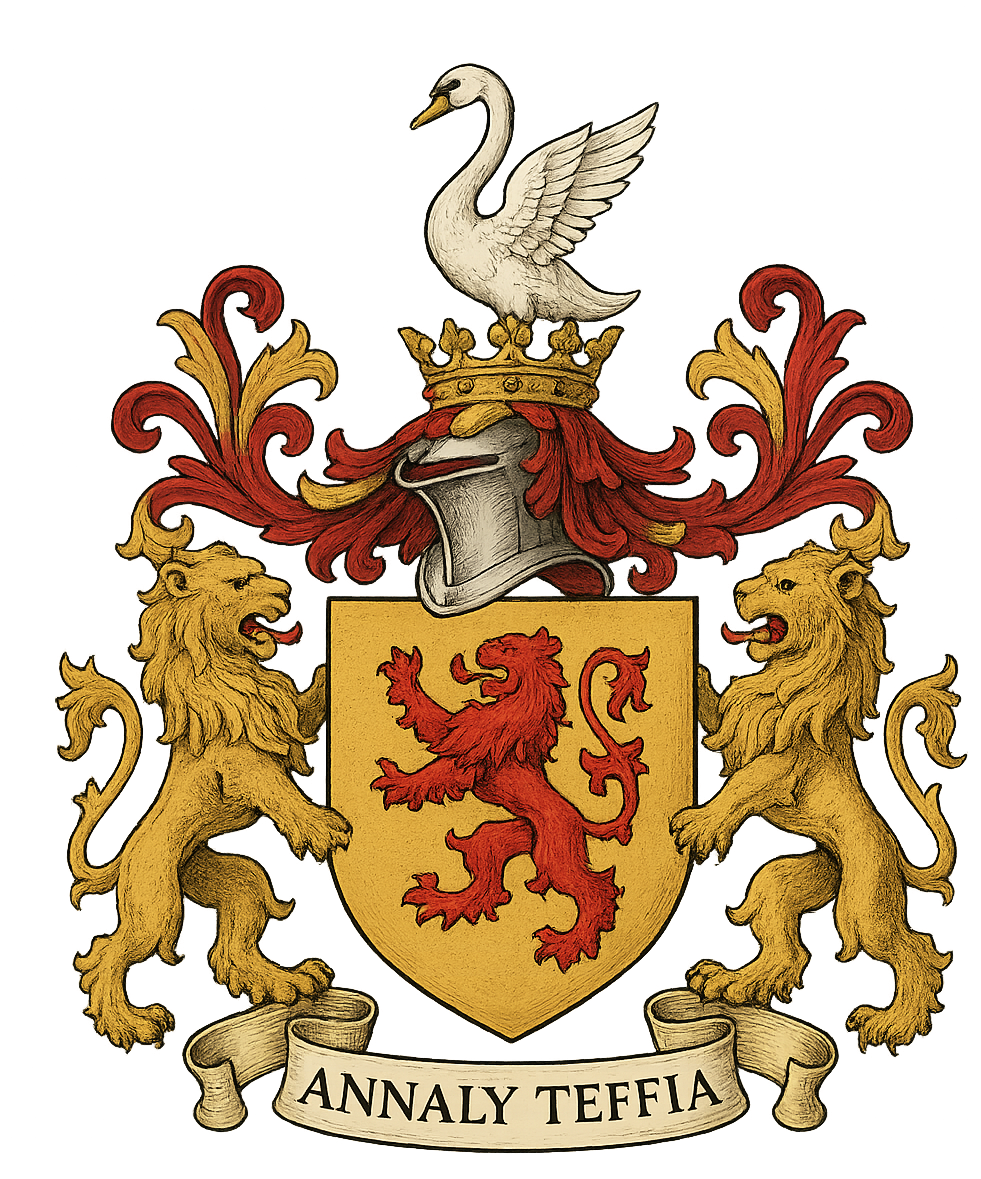
1) House of Annaly–Teffia

  • Modern acquirer: George Mentz

  • Principality Territory acquired: Annaly–Teffia (Longford / ancient Teffia)

  • Date of acquisition: 2018

  • Method: Purchase and conveyance of the Honour and Seignory of Longford, representing the historic territorial successor of the 1,500 year old Principality and Territory of the Kingdom of Annaly–Teffia

  • Result:
    The territorial house identity House of Annaly–Teffia was assumed by lawful acquisition of the historic territorial estate, following the European practice that house identity follows land, but in this special situation also follows multiple Irish, Scotish, and European bloodlines.

  • Historical depth:
    The territory itself traces to Gaelic Celtic kingship beginning c. 5th century, giving the House a territorial antiquity of approximately 1,500 years, independent of modern sovereignty questions.


2) House of Grimaldi of Monaco

  • Original family name: Grimaldi (Genoese patrician family)

  • Territory acquired: Monaco

  • Date of acquisition:

    • Initial seizure: 1297

    • Purchase and confirmation of seignory: 1346–1355

  • Result:
    The family adopted the territorial style “of Monaco”, with the territory defining the house identity thereafter.


3) House of Liechtenstein

  • Original family name: von Liechtenstein (Austrian noble family named after Liechtenstein Castle)

  • Territories acquired:

    • Lordship of Schellenberg (1699)

    • County of Vaduz (1712)

  • Purpose of acquisition:
    Purchase of land with imperial immediacy.

  • Result:
    The territorial name Liechtenstein became the permanent house name.


4) House of Savoy

  • Original family name: Humbertian dynasty (Counts of Maurienne)

  • Territory acquired: Savoy

  • Date of acquisition: c. 1003–1032, expanded through the 11th–13th centuries

  • Method: Purchase, exchange, and dynastic consolidation

  • Result:
    The house permanently assumed the territorial name Savoy, eclipsing the earlier family designation.


5) House of Orange-Nassau

  • Original family name: Nassau

  • Territory acquired: Principality of Orange

  • Date of acquisition: 1530

  • Method: Purchase and inheritance

  • Result:
    The Nassau family adopted Orange as a dynastic identifier, retaining it even after loss of the territory.


6) House of Medici of Tuscany

  • Original family name: Medici (Florentine banking family)

  • Territory acquired: Tuscany

  • Date of acquisition: 1532 (Duchy), elevated 1569

  • Method: Purchase of territorial control, political dominance, Papal and Imperial confirmation

  • Result:
    The Medici became styled “of Tuscany,” transforming a mercantile family into a territorial house.


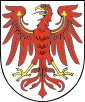
7) House of Hohenzollern of Brandenburg–Prussia

  • Original family name: Hohenzollern (Swabian nobility)

  • Territory acquired: Electorate of Brandenburg

  • Date of acquisition: 1415

  • Method: Financial alienation and imperial grant

  • Result:
    The family became identified primarily with Brandenburg, later Prussia, rather than its ancestral Swabian origin.


8) House of Bourbon

  • Original family name: Capetian cadet branch

  • Territory acquired: Lordship of Bourbon

  • Date of acquisition: 10th–11th centuries

  • Method: Purchase and consolidation

  • Result:
    The territorial name Bourbon became the permanent house name, later associated with multiple kingdoms.


The Established European Principle

  • A territory is lawfully acquired (often by purchase),

  • The territorial name becomes the house or dynastic name,

  • House identity follows land, not bloodline,

  • Antiquity of the territory may greatly predate the modern holder,

  • This practice is orthodox and widespread in European history.


One-Sentence Summary (Reusable)

Commissioner George Mentz who is also Lord of the Bailiwick of Ennerdale and Seigneur of the Fief Blondel of Normandy facilitated the 2018 acquisition of the rights to The House of Annaly–Teffia direct from the rights of the Famous Earl of Westmeath which follows a well-established European pattern in which a lawful purchaser of a historic territory assumes its territorial house name, as seen with Monaco (Grimaldi), Liechtenstein, Savoy, Orange, Tuscany, Brandenburg–Prussia, and Bourbon—where dynastic identity derives from land, not ancestry.


Nobility Rights of the Lord of Annaly Longford - Honour and Seignory

Barons of Delvin and later the Earls of Westmeath became lawful successors to the Lord of Annaly (the Gaelic Prince of Teffia and Anghaile), where a bundle of non-land feudal and constitutional rights would logically follow, even after English administrative reorganization.

Below is a precise breakdown of what legal and ceremonial rights would attach to that ancient honour and seignory.


1. Right to the Great Assembly (Óenach / Gaelic Parliament)

This is the most important point.

Nature of the Right

The Great Assembly of Annaly–Teffia was:

  • A constitutional institution, not merely tribal custom

  • A lawful gathering for:

  • Inauguration of rulers
  • Declaration of law
  • Settlement of disputes
  • Recognition of chiefs and sub-lords

Successor Right

A lawful successor to the Lordship would retain:

  • The ceremonial and constitutional right to convene or commemorate the Great Assembly

  • The right of presidency or overlordship at such an assembly

  • The exclusive dignity of being the focus of legitimacy

Even when assemblies ceased to meet in practice, the right itself was not extinguished, only dormant.

➡️ This is comparable to how:

  • The English Crown retained Parliament rights even when not summoned

  • The Isle of Man retained Tynwald rights through conquest


2. Right of Paramount Chiefship (Over-Kingship)

The Lord of Annaly was not merely a landholder — he was:

  • Prince / Chief of Chiefs

  • Overlord of subordinate clans and territories

A successor honour-holder would inherit:

  • The dignity of paramountcy
  • The symbolic authority over former client chiefs
  • The right to recognition as “Chief of the Name” in constitutional terms

Even after English conquest:

  • English peerage law frequently absorbed Gaelic dignities rather than extinguishing them
  • This is why peerage books refer to “Princes of Annaly” even after Norman control

3. Right of Inauguration & Investiture

Gaelic Custom

The Lord of Annaly had the exclusive right to:

  • Be inaugurated at a sacred or customary site
  • Receive oaths of loyalty
  • Confirm subordinate leaders

Successor Implication

The successor (Baron of Delvin / Earl of Westmeath) would retain:

  • The right to ceremonial inauguration
  • The right to symbolically receive homage
  • The right to recognize or confirm leadership titles

These rights are incorporeal hereditaments — not dependent on land possession.


4. Judicial & Arbitration Authority

Under Brehon and later hybrid systems, the Lord of Annaly held:

  • High arbitration authority

  • Oversight of:

  • Inter-clan disputes
  • Boundary disputes
  • Breaches of honor or treaty

A successor honour-holder would retain:

  • The residual judicial dignity
  • The right to preside ceremonially over dispute resolution
  • The right to appoint or recognize judges or arbitrators

Even when English courts replaced Brehon courts, the dignity of judicial overlordship survived, much like manorial courts in England.


5. Right to Law Proclamation & Customary Recognition

The Great Assembly functioned as a place where:

  • Laws were proclaimed
  • Customs were affirmed
  • Genealogies were validated

Thus, the successor would retain:

  • The right to proclaim or recognize customary law
  • The authority to authenticate genealogies and titles
  • The right to be cited as the constitutional successor of the ancient polity

This is why later heraldic and peerage authorities treat Annaly as more than a mere barony.


6. Precedence, Style, and Dignity

Even after the shiring of Longford:

  • The successor retained precedence derived from princely status

This explains why:

  • Peerage writers use prince, chief, or lord paramount
  • Annaly is treated as a historic principality, not just land

Rights include:

  • Style and honorifics linked to the ancient kingdom
  • Recognition in heraldic and genealogical law
  • Jurisdictional Crests, Banners, and Arms and patronage
  • Standing above ordinary baronial lordships

7. Why the Shiring of County Longford Did NOT Extinguish These Rights

The English Crown:

  • Created counties for administrative convenience
  • Did not automatically extinguish pre-existing honours
  • Regularly allowed ancient dignities to persist in parallel

Examples elsewhere:

  • Lords of the Isles
  • Princes of Powys ( See Discussion below)
  • Marcher Lordships
  • Lords of Mann

Annaly fits this same legal pattern.


Bottom Line (Clean Legal Conclusion)

If the Barons of Delvin and later the Earl of Westmeath were lawful successors to the Lord of Annaly prior to the shiring of Longford, then the rights they would inherit include:

  • ✔️ The constitutional right to the Great Assembly

  • ✔️ The paramount leadership dignity

  • ✔️ The right of inauguration and investiture

  • ✔️ The ceremonial judicial authority

  • ✔️ The right to proclaim and recognize custom

  • ✔️ The precedence and style of a princely honour

These are incorporeal, inheritable, and historically recognized rights — not dependent on continued territorial sovereignty.


Native Rulers in the Commonwealth
In former colonies, the Crown respects certain native monarchies as sovereign equals or ceremonial leaders within the  Commonwealth of Nations:
  • Sovereign Indigenous Monarchies: The Crown recognizes the sovereign status of the monarchs of  ,  ,  , and  .
  • Unique Titles: In  , the British monarch respects the Yang di-Pertuan Agong (an elected monarch), and in  , the O le Ao o le Malo.
  • Ceremonial Recognition: In some former colonies like  , while "princely states" were abolished upon independence, the Crown may still maintain private, honorary social ties with former royal families, though they hold no official political rank.
Summary of Recognized Status
Territory Type Recognized "Prince" or Ruler Official Status
Wales
Prince William Heir apparent to the British throne.
Isle of Man
The King Lord of Mann.
Channel Islands
The King Duke of Normandy.
Commonwealth
Local Kings/Sultans (e.g., 
Tonga
)
Sovereign heads of independent states.


AnnalyTeffia1


BlondelArms170 

SeigneurCrest

BlondelMan

Flag


 Coronet-Free-Lord

Meath


 Honour of Longford
 About Longford
 Feudal Prince
 House of Annaly Teffia
 Rarest of All Noble Grants in European History
 Statutory Declaration by Earl Westmeath
 Kingdoms of County Longford
 Pedigree of Longford Annaly
 What is the Honor of Annaly
 The Seigneur
 Chronology of Teffia Annaly
 Lords Paramount Ireland
 Market & Fair
 Deed & Title
 Chief of The Annaly
 One of a Kind Title
 Lord Governor of Annaly
 Prince of Annaly
 Tuath
 Principality
 Feudal Kingdom
 Irish Princes before English Dukes & Barons
 Fons Honorum
 Seats of the Kingdoms
 Clans of Longford Region
 History Chronology of Annaly Longford
 Hereditaments
 Captainship of Ireland
 Princes of Longford
 News
 Parliament
 850 Years
 Titles of Annaly
 Irish Free State 1172-1916
 Feudal Princes
 1556 Habsburg Grant and Princely Title
 Rathline and Cashel Kingdom
 The Last Irish Kingdom
 Landesherrschaft
 King Edward VI - Grant of Annaly Granard
 Spritual Rights of Honour of Annaly
 Principality of Cairbre-Gabhra
 House of Annaly Teffia 1400 Years Old
 Count of the Palatine of Meath
 Irish Property Law
 Manors Castles and Church Lands
 A Barony Explained
 Moiety of Barony of Delvin
 Nugents of Annaly Ireland
 Spiritual & Temporal
 Islands of The Honour of Annaly Longford
 Blood Dynastic
 Burke's Debrett's Peerage Recognitions
 Water Rights Annaly
 Writs to Parliament
 Irish Nobility Law
 Moiety of Ardagh
 Dual Grant from King Philip of Spain
 Rights of Lords & Barons
 Princes of Annaly Pedigree
 Abbeys of Longford
 Styles and Dignities
 Ireland Feudal Titles Versus France & Germany Austria
 Sovereign Title Succession
 Mediatized Prince of Ireland
 Grants to Delvin
 Lord of St. Brigit's Longford Abbey Est. 1578
 Feudal Barons
 Water & Fishing Rights
 Ancient Castles and Ruins
 Abbey Lara
 Honorifics and Designations
 Kingdom of Meath
 Feudal Westmeath
 Seneschal of Meath
 Lord of the Pale
 Irish Gods
 The Feudal System
 Baron Delvin
 Kings of Hy Niall Colmanians
 Irish Kingdoms
 Order of St. Columba
 Contact
 Irish Feudal Law
 Irish Property Rights
 Indigeneous Clans
 Maps
 Valuation of Principality & Barony of Annaly Longford