CASTLE CORNET
THE CHATEAU DES CORNEILLES OF GUERNSEY ISLAND - CHANNEL ISLANDS
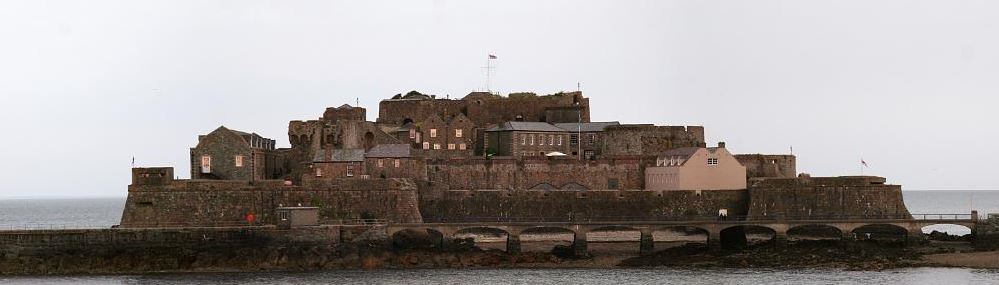
The fortifications of this castle are almost eight centuries old. When King John Lackland lost Normandy to
France in 1204, Guernsey chose to remain loyal to the English king. The island was immediately threatened by the
French and the islanders decided to build Castle Cornet to protect themselves. Construction began in 1206 and
lasted nearly 20 years. During the Hundred Years War, French and English fought hard and he passed several times
hand in hand, after fierce battles.
Military techniques progressing, the castle was constantly reinforced and modified. During the civil war in
England, the governor of Guernsey, Peter Osborne, retreated there and defied the rest of the island that had sided
with Cromwell. The castle had to undergo a seat of nearly 9 years, during which he received the very valuable
support of Jersey, remained loyal to his sovereign. More than 100,000 cannon balls were fired against the
castle.
At the restoration of royalty, it was the jail of Sir John Lambert, former general of Cromwell, which was feared
to resume the succession. But Lambert was again peaceful, and he occupied his captivity to lovingly arrange the
gardens of the castle, which can be visited today. In 1672 a tragic accident occurred. During a violent storm,
lightning fell on the ammunition depot, which exploded. The blast made the dungeon collapse, taking with it the
house where Lady Hatton, the wife of the governor, who died buried, was. During the Napoleonic era, for fear
of a new French attack, Castle Cornet was modernized and armed with formidable guns, which never served.
Castle of Guernsey ( Castle Cornet)
When hostilities between English and French ended, the castle served as an arsenal, prison and barracks. Its
military function was abandoned until 1940, year of the invasion of the island by the Germans. These concreted some
parts of the castle in order to integrate it into their device of defense, the wall of the Atlantic.
|