Honour of Annaly - Feudal Principality & Seignory Est. 1172


|

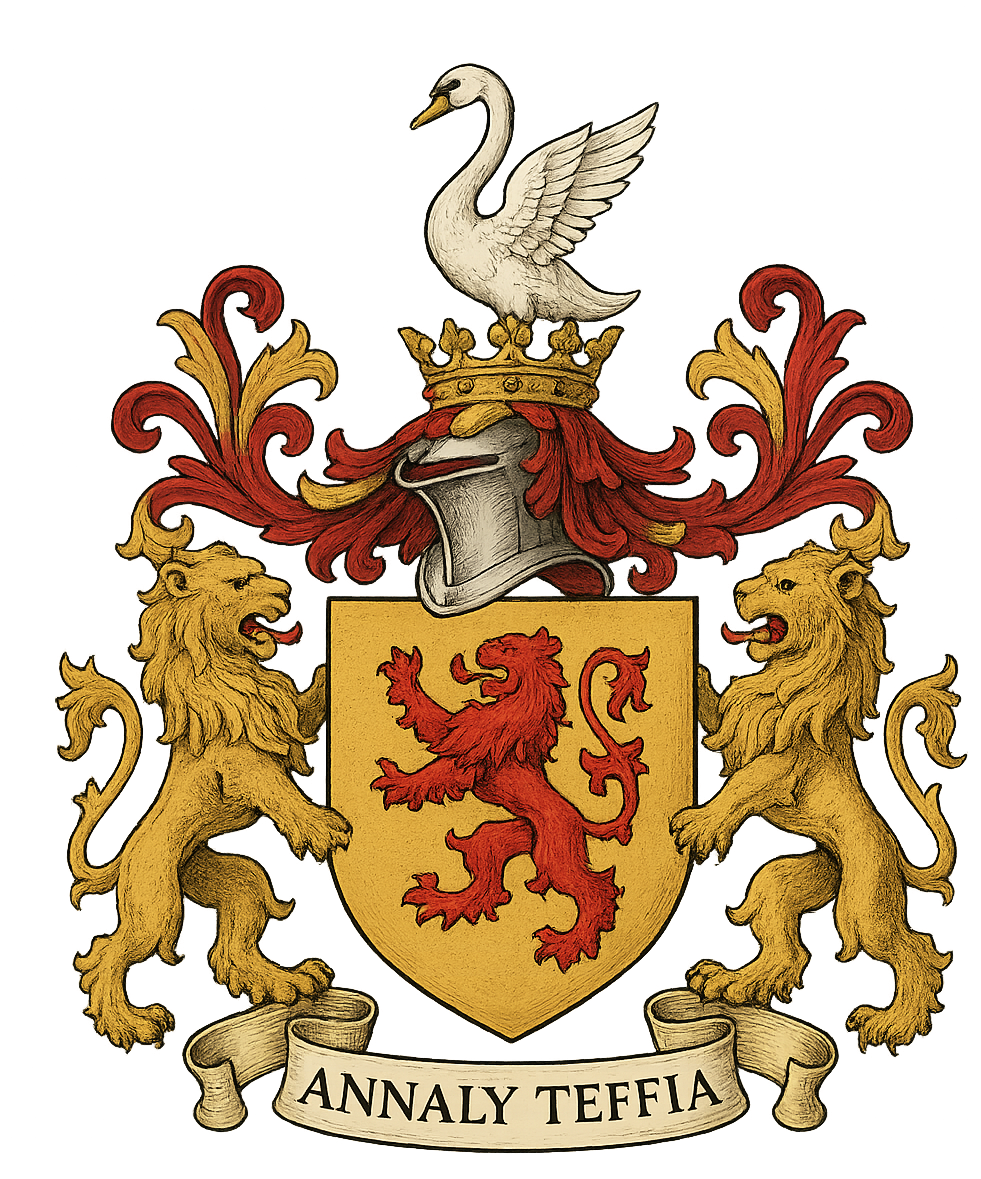
Annaly–Teffia Indigenous Tribal KingdomA Living Framework of Custodial Territory, Lineage, and Cultural Continuity The Annaly–Teffia Indigenous Tribal Kingdom represents a profound and compelling example of how territory can persist beyond the confines of modern legal definitions. It challenges the narrow conception of land as a commodity and instead reveals a deeper truth: that land is a continuum of memory, authority, and cultural identity. In this model, territory is not extinguished by political change, nor reduced to title deeds and registries. Rather, it survives through lineage, knowledge, and recognition—carried forward across centuries as a living institution. By framing the Honour of Annaly as a custodial institution, rather than a sovereign state or a commercial estate, we arrive at a position that is both historically grounded and legally defensible. This approach respects the supremacy of modern statutory law while preserving the enduring legitimacy of ancient territorial frameworks rooted in the earlier kingdom of Teffia. I. The Foundational Parallel: Indigenous and Feudal ContinuityAt the heart of this analysis lies a striking structural parallel between indigenous tribal systems and the Honour of Annaly. Though arising from different historical contexts, both systems reflect a shared understanding of land as something more than property.
This comparison reveals that the Honour of Annaly is not merely a feudal artifact, but a hybrid institutional form—one that bridges Gaelic customary traditions and Norman feudal structures. Both systems rely on continuity rather than codification, and both derive legitimacy from recognition, memory, and historical persistence. II. Custodianship Over OwnershipOne of the most important insights in this framework is the distinction between ownership and custodianship. Modern Western law defines ownership as:
By contrast, in indigenous and Annaly–Teffia traditions, land is something held in trust, not possessed absolutely. The Honour of Annaly may therefore be understood as:
This reframing resolves potential legal conflict. It allows the Honour to maintain a territorial identity without asserting claims that would interfere with modern property rights. The land belongs, in a conceptual sense, to the Honour as a continuing institution—transcending any single holder. III. Knowledge as AuthorityIn both indigenous systems and the Annaly–Teffia model, knowledge itself becomes a form of authority. Authority is not dependent solely on:
Instead, it is grounded in:
This principle echoes the traditions of Brehon Law, where law was carried through learned custodians and embedded in social memory rather than codified statutes. Similarly, the Honour of Annaly derives legitimacy from its continuity of knowledge—its ability to preserve and transmit the structure of the territory across generations. IV. Continuity Despite DisruptionThe history of Ireland is one of profound transformation: from Gaelic kingdoms to Norman lordships, from Tudor centralization to the modern Irish state. Yet, like many indigenous systems worldwide, the identity of Annaly–Teffia persists. This persistence reflects a deeper legal and cultural truth:
The Honour of Annaly maintains continuity through:
This mirrors the resilience of indigenous territories across the world, where connection to land survives colonization, legal displacement, and political restructuring. The kingdom of Teffia did not disappear; it evolved, becoming embedded within later feudal and legal forms. V. Customary Law and Layered LegitimacyThe Annaly–Teffia model operates within a layered legal reality, where multiple systems coexist:
While the modern state does not recognize feudal or tribal authorities as sovereign jurisdictions, it does not erase their historical or cultural existence. Instead, these systems persist as:
This creates a form of layered legitimacy, in which:
VI. Legal Nuance in the Modern ContextThe modern legal position requires careful distinction. Under Irish law:
However:
On the international level, the United Nations has articulated principles recognizing the importance of traditional land relationships through instruments such as the Declaration on the Rights of Indigenous Peoples. While these protections apply primarily to recognized indigenous communities, they reinforce a broader principle: that land can exist as a cultural and legal reality beyond modern ownership models. VII. A Living Tradition, Not a Legal AnomalyWhen properly understood, the Annaly–Teffia Indigenous Tribal Kingdom is not:
It is instead:
It shares structural similarities with:
These are not sovereign states in the modern sense. They are enduring expressions of identity and authority that coexist with contemporary legal systems. ConclusionThe Annaly–Teffia Indigenous Tribal Kingdom demonstrates that territory is not merely a matter of ownership, but of continuity, memory, and relationship. By understanding the Honour of Annaly as a custodial institution, we reconcile ancient territorial frameworks with modern legal realities. In this light, Annaly is neither vanished nor obsolete. It is a living embodiment of historical continuity—sustained through lineage, knowledge, and the enduring human bond with land. It stands as a reminder that while laws may change and states may rise and fall, the deeper structures of identity and territory can endure, quietly and persistently, across the centuries.
Annaly–Teffia Longford: A Living Territorial Kingdom in Comparative PerspectiveThe territorial tradition of Annaly–Teffia Longford may be understood as a rare and enduring example of a historic territorial kingdom and principality whose identity has persisted across approximately 1,500 years. Unlike modern political entities defined solely by statutory boundaries, Annaly–Teffia represents a continuum of land, lineage, culture, and customary authority—a framework that survives through memory, record, and recognition rather than through modern sovereignty. In this sense, Annaly–Teffia stands alongside many of the world’s indigenous and historic territorial systems. It reflects a model in which territory is not merely owned, but stewarded, and where authority derives from continuity rather than from contemporary state creation. I. Annaly–Teffia as a Custodial Territorial InstitutionAnnaly–Teffia may be described as:
Its boundaries—expressed historically through townlands, ecclesiastical sites, and natural features—have remained remarkably stable in cultural and historical understanding, even as political control passed through Norman, Tudor, and modern Irish state frameworks. This places Annaly–Teffia in a category similar to indigenous territorial systems:
II. The Indigenous ParallelLike recognized indigenous territories worldwide, Annaly–Teffia demonstrates:
This aligns with broader global patterns of territorial persistence where: 👉 land is understood as a cultural and legal continuum, not just a transferable asset III. Comparative Models of Territorial RecognitionA useful way to understand Annaly–Teffia is to place it within the global spectrum of how historic and indigenous territories are recognized today. Māori — New Zealand
Cree / Inuit (Canada) — Nunavut, James Bay
Navajo Nation — United States
Sámi — Nordic Countries
Scottish Clans / Welsh Marcher Lordships — United Kingdom
Symbolically Recognized Indigenous Groups (Various States)
IV. Positioning Annaly–Teffia Within This SpectrumThese examples reveal a continuum of recognition:
Where Annaly–Teffia FitsAnnaly–Teffia most closely aligns with: 👉 Historical/Cultural Continuity + Custodial Territorial Identity It may be understood as:
V. Legal Compatibility with Modern IrelandUnder Irish law:
However:
This allows Annaly–Teffia to exist as: 👉 a compatible custodial structure, rather than a competing authority VI. The Concept of Territorial ContinuityThe deeper principle illustrated here is:
Annaly–Teffia exemplifies:
Much like indigenous territories worldwide, it represents a layered sovereignty model, where:
ConclusionAnnaly–Teffia Longford is not a relic of the past, nor a claim to modern sovereignty. It is a living territorial tradition—a principality in the historical and cultural sense—maintained through lineage, knowledge, and continuity. When viewed alongside global examples—from Māori treaty systems to Scottish clan structures—it becomes clear that Annaly–Teffia belongs to a recognized category of enduring territorial identities:
In this light, Annaly–Teffia stands as a compelling European analogue to indigenous territorial systems worldwide—a testament to the enduring human relationship between land, identity, and history. | ||||||||||||||||||||||||||||||
About Longford Feudal Prince House of Annaly Teffia Rarest of All Noble Grants in European History Statutory Declaration by Earl Westmeath Kingdoms of County Longford Pedigree of Longford Annaly What is the Honor of Annaly The Seigneur Irish Roots of George Mentz Chronology of Teffia Annaly Lords Paramount Ireland Market & Fair Chief of The Annaly One of a Kind Title Lord Governor of Annaly Prince of Annaly Tuath Principality Feudal Kingdom Irish Princes before English Dukes & Barons Fons Honorum Seats of the Kingdoms Clans of Longford Region History Chronology of Annaly Longford Oldest Gaelic Kingdom Annaly Principality Nobility Law Normandy Hereditaments Captainship of Ireland Princes of Longford Holy Sites & Gods News Parliament 850 Years Grants in Six Baronies to Delvin Leadership Titles of Annaly Irish Free State 1172-1916 Feudal Princes 1556 Habsburg Grant and Princely Title Rathline and Cashel Kingdom The Last Irish Kingdom Landesherrschaft King Edward VI - Grant of Annaly Granard Spritual Rights of Honour of Annaly Principality of Cairbre-Gabhra House of Annaly Teffia 1400 Years Old Count of the Palatine of Meath Irish Property Law Manors Castles and Church Lands A Barony Explained Moiety of Barony of Delvin Nugents of Annaly Ireland Spiritual & Temporal Islands of The Honour of Annaly Longford Blood Dynastic Burke's Debrett's Peerage Recognitions Water Rights Annaly Property Law Writs to Parliament Irish Nobility Law Moiety of Ardagh Dual Grant from King Philip of Spain Rights of Lords & Barons Princes of Annaly Pedigree Abbeys of Longford Styles and Dignities Ireland Feudal Titles Versus France & Germany Austria Sovereign Title Succession Mediatized Prince of Ireland Grants to Delvin Lord of St. Brigit's Longford Abbey Est. 1578 Feudal Barons Water & Fishing Rights Clan Brehon Tribal Law Comparison Ancient Castles and Ruins Abbey Lara Honorifics and Designations Kingdom of Meath Feudal Westmeath Seneschal of Meath Lord of the Pale Irish Gods The Feudal System Baron Delvin Kings of Hy Niall Colmanians Irish Kingdoms Order of St. Columba Chief Captain Kings Forces Commissioners of the Peace Tenures Abolition Act 1662 - Rights to Sit in Parliament Contact Law of Ireland List of Townlands of Longford Annaly English Pale Court Barons Lordships of Granard Irish Feudal Law Datuk Seri Baliwick of Ennerdale Moneylagen Lord Baron Longford Baron de Delvyn Longford Map Lord Baron of Delvin Baron of Temple-Michael Baron of Annaly Kingdom Annaly Lord Conmaicne Baron Annaly Burke's and Debrett's Peerage Citations Order of Saint Patrick Baron Lerha Granard Baron AbbeyLara Baronies of Longford Princes of Conmhaícne Angaile or Muintir Angaile Baron Lisnanagh or Lissaghanedan Baron Moyashel Baron Rathline Baron Inchcleraun HOLY ISLAND Quaker Island Longoford CO Abbey of All Saints Kingdom of Uí Maine Baron Dungannon Baron Monilagan - Babington Lord Liserdawle Castle Baron Columbkille Kingdom of Breifne or Breny Baron Kilthorne Baron Granarde Count of Killasonna Baron Skryne Baron Cairbre-Gabhra AbbeyShrule Events Castle Site Map Disclaimer Irish Property Rights Indigeneous Clans Dictionary Maps Honorable Colonel Mentz Valuation of Principality & Barony of Annaly Longford Irish Noble Titles of Annaly Longford“The Princely House of Annaly–Teffia is a territorial and dynastic house of approximately 1,500 years’ antiquity, originating in the Gaelic kingship of Teffia and preserved through the continuous identity, property law, international law, and inheritance of its lands, irrespective of changes in political sovereignty.”
Feudal Baron of Longford Annaly - Baron Longford Delvin Lord Baron &
Freiherr of Longford Annaly Feudal Barony Principality Count Kingdom of Meath - Feudal Lord of the Fief
Blondel of the Nordic Channel Islands Guernsey Est. 1179 George Mentz
Bio -
George Mentz Noble Title -
George Mentz Ambassador - Order of the Genet
Knighthood Feudalherr - Fief Blondel von der Nordischen
Insel Guernsey Est. 1179 * New York Gazette ®
- Magazine of Wall Street - George
Mentz - George
Mentz - Aspen Commission - Ennerdale - Stoborough - ESG
Commission - Ethnic Lives Matter
- Chartered Financial Manager -
George Mentz
Economist -
George Mentz Ambassador -
George Mentz - George Mentz Celebrity -
George Mentz Speaker - George Mentz Audio Books - George Mentz Courses - George Mentz Celebrity Speaker Wealth
Management -
Counselor George Mentz Esq. - Seigneur Feif Blondel - Lord Baron
Longford Annaly Westmeath
www.BaronLongford.com * www.FiefBlondel.com |

Commissioner George Mentz - George
Mentz Law Professor - George
Mentz Economist
George Mentz News -
George Mentz Illuminati Historian -
George Mentz Net Worth
The Globe and Mail George Mentz
Get Certifications in Finance and Banking to Have Career Growth | AP News