Honour of Annaly - Feudal Principality & Seignory Est. 1172


|

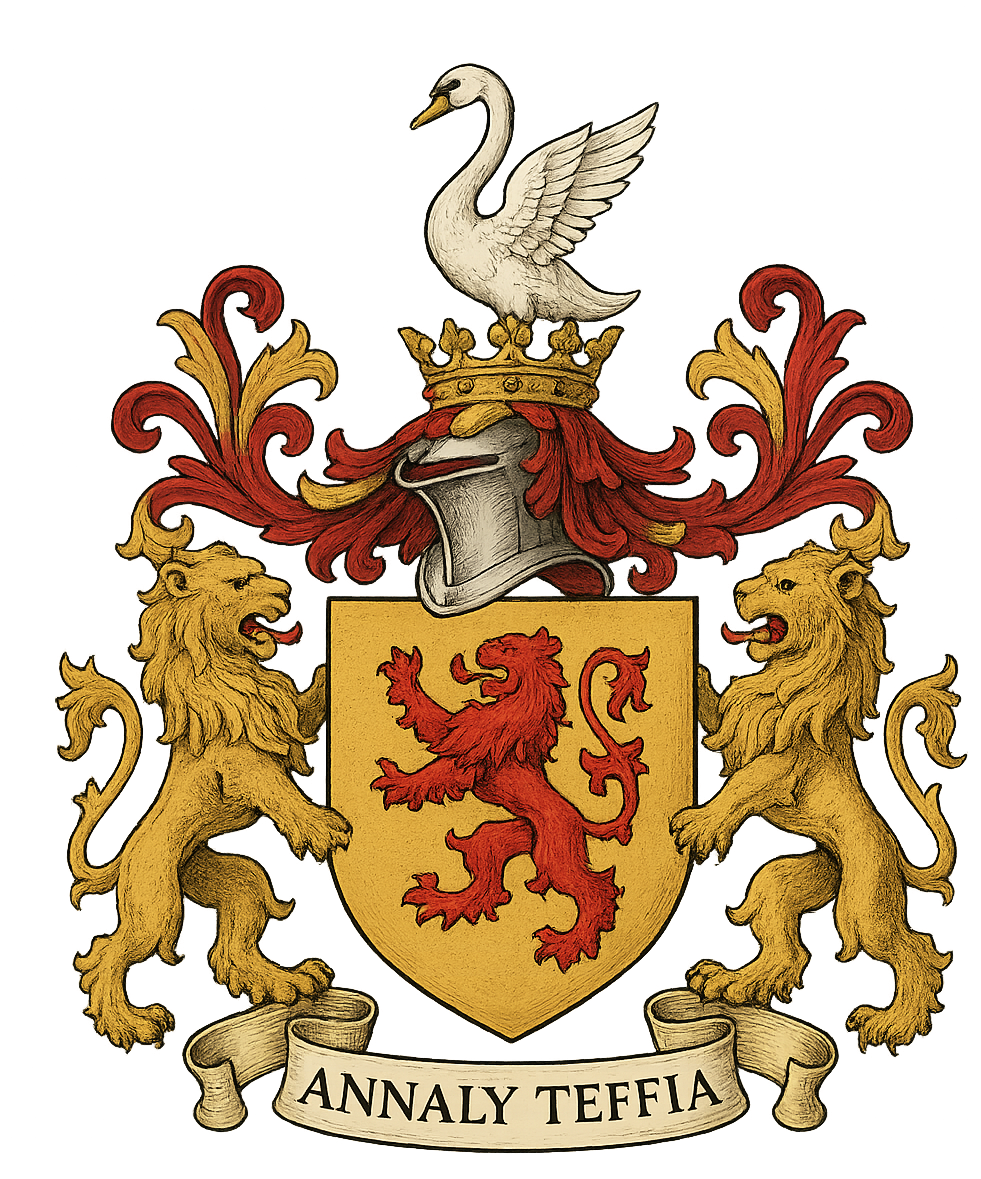
The Honor of Annaly–TeffiaTraditional Governance Structure - Offices and AssembliesBefore the territory was known as Annaly, the region around Granard formed part of the ancient Gaelic Kingdom of Tethbae (Teffia). Prior to 800 AD, this kingdom was governed through traditional Gaelic assemblies, where nobles, judges, and clan leaders gathered to deliberate on law, succession, and matters of governance. Between 800 and 1000 AD, Granard developed into an important regional center within North Teffia, likely serving as a meeting place for these assemblies. Around 1000–1100 AD, the Ó Fearghail (O’Farrell) dynasty rose to power in the region, establishing themselves as the ruling princes. After 1100 AD, the territory became widely known as Annaly (Anghaile), named after an early O’Farrell ruler, and the princes of Annaly continued to hold assemblies and councils in the Granard area. In simple terms, the ancient assembly at Granard was most likely known in Gaelic as Óenach Tethbae (“the Assembly of Teffia”) in the earlier period, and later as Mórdháil Anghaile (“the Great Assembly of Annaly”) once the O’Farrell principality emerged. The Governance Structure of the Honor of Annaly TeffiaLord ParamountGeorge Mentz The Lord Paramount serves as the senior head and steward of the historic honor of Annaly–Teffia Longford. The Lord Paramount presides over the council of the honor, confirms offices, appoints captains and barons, and maintains the traditions and ceremonial dignity of the territory. Territorial GovernanceLord Captain of AnnalyDeputy territorial governor acting on behalf of the Lord Paramount. Responsibilities include:
Council of the Honor of AnnalyThe council serves as the advisory body assisting the Lord Paramount and the Lord Captain. Members may include:
Nobility of the HonorBarons of AnnalyBarons represent historic districts and estates within the honor. They serve as regional leaders and advisors to the Lord Captain and the Lord Paramount. Possible baronial designations may include:
Officers of the HonorSeneschal of AnnalyChief administrator of the honor responsible for organizational matters and coordination of the council. Chancellor of AnnalyKeeper of charters, records, and official documents of the honor. Marshal of AnnalyResponsible for ceremony, protocol, and organization of events of the honor. Herald of AnnalyCustodian of the symbols, seals, and heraldic traditions of the honor. Assembly of AnnalyThe Honor may convene periodic gatherings inspired by the historic Gaelic assemblies once held in the region around Granard and Longford over the last 1,500 Years. These gatherings may include:
The assembly celebrates the heritage and historical traditions of the ancient territory of Annaly.
The ancient Irish assembly associated with Annaly (Anghaile) and Teffia around Granard was part of the Gaelic system of governance. It was not called a “parliament” in the modern English sense. Instead, the assembly was known by Gaelic terms such as:
In the Annaly–Teffia region, historians often refer to the local assembly as the Mórdháil of Annaly, centered near Granard and Moatfarrell (Móta Uí Fhearghail). The Ancient Assembly of Annaly–Teffia (Granard)1. Location of the AssemblyThe assembly site was located at Moatfarrell, an ancient earthwork near Granard in County Longford. This site served as the political and ceremonial center of the Princes of Annaly (the O’Farrell dynasty) for many centuries. Granard itself was an extremely ancient settlement and a seat of government in the kingdom of Annaly, which originally formed part of the larger territory of Teffia (Tethbae) within the kingdom of Meath. The Gaelic Political SystemBefore the Norman and English system of feudal government arrived, Ireland was governed through clan kingdoms with assemblies of nobles and chiefs. In Annaly the ruling clan was the Ó Fearghail (O’Farrell) dynasty, who ruled the principality for about 600 years (11th–17th centuries). Their assembly functioned as the highest political authority of the territory. What the Assembly DidThe Mórdháil / Óenach of Annaly served several major functions: 1. Election and Inauguration of ChiefsGaelic kings were not simply hereditary monarchs. Assemblies were held to:
2. Law and JudgmentsThe assembly served as the supreme court of the territory. Under Brehon Law, the chiefs and judges (Brehons) would:
3. Military and Political CouncilsThe assembly also acted as a war council where chiefs gathered to decide:
4. Ceremonial and Cultural GatheringsLike other Irish assemblies, it often included:
Ancient Irish assemblies commonly combined legal, political, religious, and social functions. Why Granard Was ImportantGranard was strategically located in northern Teffia and became:
Later sources even describe Granard as having a “Convention Hall” or government house where the rulers assembled their council. Transition to the Feudal SystemAfter the Norman invasion of Ireland (12th century):
However, the ancient assembly traditions were remembered and even referenced in later royal patents when the Crown incorporated the region into feudal honors and baronies.
Gaelic Terms That Could Apply to the AssemblySeveral Gaelic political terms could describe the assembly:
The most historically appropriate for a kingdom gathering is: Óenach Tethbae or later Mórdháil Anghaile (Assembly of Annaly). | ||||||||||
About Longford Feudal Prince House of Annaly Teffia Rarest of All Noble Grants in European History Statutory Declaration by Earl Westmeath Kingdoms of County Longford Pedigree of Longford Annaly What is the Honor of Annaly The Seigneur Irish Roots of George Mentz Chronology of Teffia Annaly Lords Paramount Ireland Market & Fair Chief of The Annaly One of a Kind Title Lord Governor of Annaly Prince of Annaly Tuath Principality Feudal Kingdom Irish Princes before English Dukes & Barons Fons Honorum Seats of the Kingdoms Clans of Longford Region History Chronology of Annaly Longford Oldest Gaelic Kingdom Annaly Principality Nobility Law Normandy Hereditaments Captainship of Ireland Princes of Longford Holy Sites & Gods News Parliament 850 Years Grants in Six Baronies to Delvin Leadership Titles of Annaly Irish Free State 1172-1916 Feudal Princes 1556 Habsburg Grant and Princely Title Rathline and Cashel Kingdom The Last Irish Kingdom Landesherrschaft King Edward VI - Grant of Annaly Granard Spritual Rights of Honour of Annaly Principality of Cairbre-Gabhra House of Annaly Teffia 1400 Years Old Count of the Palatine of Meath Irish Property Law Manors Castles and Church Lands A Barony Explained Moiety of Barony of Delvin Nugents of Annaly Ireland Spiritual & Temporal Islands of The Honour of Annaly Longford Blood Dynastic Burke's Debrett's Peerage Recognitions Water Rights Annaly Property Law Writs to Parliament Irish Nobility Law Moiety of Ardagh Dual Grant from King Philip of Spain Rights of Lords & Barons Princes of Annaly Pedigree Abbeys of Longford Styles and Dignities Ireland Feudal Titles Versus France & Germany Austria Sovereign Title Succession Mediatized Prince of Ireland Grants to Delvin Lord of St. Brigit's Longford Abbey Est. 1578 Feudal Barons Water & Fishing Rights Clan Brehon Tribal Law Comparison Ancient Castles and Ruins Abbey Lara Honorifics and Designations Kingdom of Meath Feudal Westmeath Seneschal of Meath Lord of the Pale Irish Gods The Feudal System Baron Delvin Kings of Hy Niall Colmanians Irish Kingdoms Order of St. Columba Chief Captain Kings Forces Commissioners of the Peace Tenures Abolition Act 1662 - Rights to Sit in Parliament Contact Law of Ireland List of Townlands of Longford Annaly English Pale Court Barons Lordships of Granard Irish Feudal Law Datuk Seri Baliwick of Ennerdale Moneylagen Lord Baron Longford Baron de Delvyn Longford Map Lord Baron of Delvin Baron of Temple-Michael Baron of Annaly Kingdom Annaly Lord Conmaicne Baron Annaly Burke's and Debrett's Peerage Citations Order of Saint Patrick Baron Lerha Granard Baron AbbeyLara Baronies of Longford Princes of Conmhaícne Angaile or Muintir Angaile Baron Lisnanagh or Lissaghanedan Baron Moyashel Baron Rathline Baron Inchcleraun HOLY ISLAND Quaker Island Longoford CO Abbey of All Saints Kingdom of Uí Maine Baron Dungannon Baron Monilagan - Babington Lord Liserdawle Castle Baron Columbkille Kingdom of Breifne or Breny Baron Kilthorne Baron Granarde Count of Killasonna Baron Skryne Baron Cairbre-Gabhra AbbeyShrule Events Castle Site Map Disclaimer Irish Property Rights Indigeneous Clans Dictionary Maps Honorable Colonel Mentz Valuation of Principality & Barony of Annaly Longford Irish Noble Titles of Annaly Longford“The Princely House of Annaly–Teffia is a territorial and dynastic house of approximately 1,500 years’ antiquity, originating in the Gaelic kingship of Teffia and preserved through the continuous identity, property law, international law, and inheritance of its lands, irrespective of changes in political sovereignty.”
Feudal Baron of Longford Annaly - Baron Longford Delvin Lord Baron &
Freiherr of Longford Annaly Feudal Barony Principality Count Kingdom of Meath - Feudal Lord of the Fief
Blondel of the Nordic Channel Islands Guernsey Est. 1179 George Mentz
Bio -
George Mentz Noble Title -
George Mentz Ambassador - Order of the Genet
Knighthood Feudalherr - Fief Blondel von der Nordischen
Insel Guernsey Est. 1179 * New York Gazette ®
- Magazine of Wall Street - George
Mentz - George
Mentz - Aspen Commission - Ennerdale - Stoborough - ESG
Commission - Ethnic Lives Matter
- Chartered Financial Manager -
George Mentz
Economist -
George Mentz Ambassador -
George Mentz - George Mentz Celebrity -
George Mentz Speaker - George Mentz Audio Books - George Mentz Courses - George Mentz Celebrity Speaker Wealth
Management -
Counselor George Mentz Esq. - Seigneur Feif Blondel - Lord Baron
Longford Annaly Westmeath
www.BaronLongford.com * www.FiefBlondel.com |
Commissioner George Mentz - George
Mentz Law Professor - George
Mentz Economist
George Mentz News -
George Mentz Illuminati Historian -
George Mentz Net Worth
The Globe and Mail George Mentz
Get Certifications in Finance and Banking to Have Career Growth | AP News