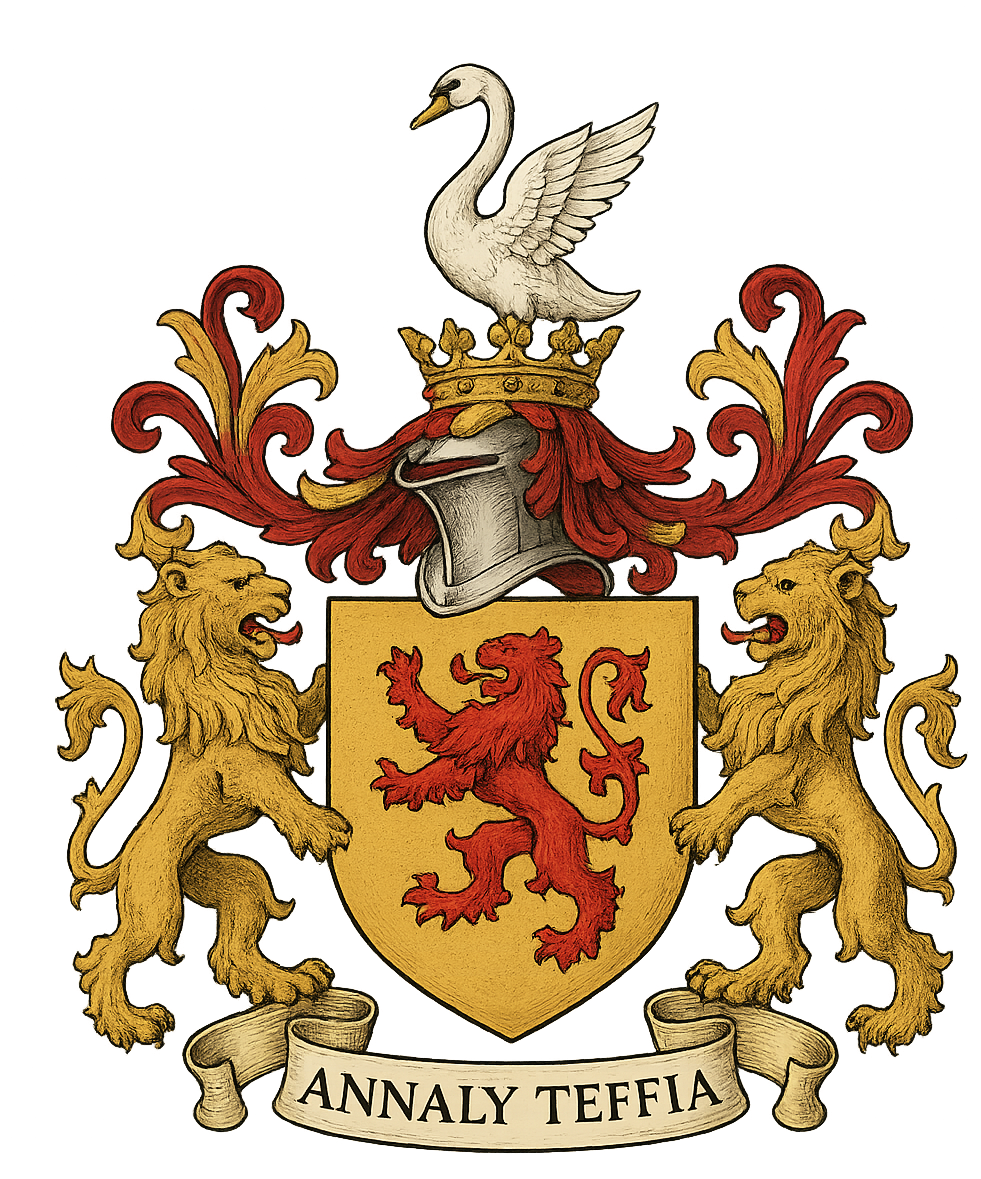
Oldest Gaelic Kingdom Territory Annaly–Teffia
Compared to Europe’s Most Historic Principalities
Annaly–Teffia, traditionally dated to approximately 450 AD,
is often presented as one of the earliest territorial principalities
associated with the ancient Gaelic world. Centered in what is now
County Longford, the territory formed part of the ancient Kingdom
of Teabhtha (Teffia) and was historically ruled by the Ó Fearghail (O’Farrell)
dynasty.
What makes Annaly–Teffia especially notable is that its
traditional foundation predates many of Europe’s most famous and enduring
principalities, including several that later became internationally
recognized sovereign or semi-sovereign states.
Comparative Chart of Historic European
Principalities
| Principality |
Approximate Origin |
Region |
Historical Importance |
| Annaly–Teffia |
c. 450 AD |
Ireland |
Ancient Gaelic principality
associated with Teabhtha and the Ó Fearghail
princes. |
|
Principality of
Monaco |
1297 AD |
Mediterranean |
One of the world’s oldest surviving
sovereign principalities under the Grimaldi
dynasty. |
|
Principality of
Asturias |
718 AD |
Spain |
Early Christian principality formed
during the Reconquista. |
|
Principality of
Catalonia |
988 AD |
Spain |
Major medieval Mediterranean
political and commercial power. |
|
Principality of
Transylvania |
11th Century |
Eastern Europe |
Influential frontier principality
under Hungarian and later autonomous rule. |
|
Principality of
Wales |
1216 AD |
Britain |
Historic Welsh principality under
Llywelyn the Great. |
|
Principality of
Moldavia |
1359 AD |
Eastern Europe |
Medieval Romanian principality
central to Eastern European history. |
|
Principality of
Wallachia |
1330 AD |
Eastern Europe |
Historic Romanian principality
associated with Vlad III Dracula. |
|
Principality of
Serbia |
8th Century |
Balkans |
Early South Slavic principality that
later evolved into a kingdom and empire. |
|
Principality of
Kiev |
9th Century |
Eastern Europe |
Foundational polity of Kyivan
Rus’. |
Why Annaly–Teffia Stands Apart
Antiquity
Annaly–Teffia’s traditional origin around 450 AD places it
centuries earlier than most of Europe’s recognized medieval principalities.
Even famous dynastic principalities such as Monaco, Wales, Moldavia, and
Wallachia arose many centuries later.
Gaelic Rather Than Feudal Origins
Unlike many continental principalities that emerged from
feudal systems, Annaly originated within the native Gaelic clan and kingship
structure of early Ireland.
Territorial Continuity
The territory of Annaly maintained a recognizable identity
that broadly corresponds with modern County Longford, reflecting unusual
geographic continuity over many centuries.
Dynastic Legacy
The Ó Fearghail rulers remained associated with the
territory for generations, preserving a princely identity that survived well
into the early modern era.
Conclusion
When compared to Europe’s most recognized historical
principalities, Annaly–Teffia occupies an unusually ancient place in the
historical timeline. Its claimed fifth-century origins, combined with its
Gaelic dynastic heritage and enduring territorial identity, distinguish it
as one of the earliest princely traditions associated with medieval Europe
and Ireland’s ancient political order.